
See the work, then name the stall
We start from how requests actually move — not from an org chart or a preferred framework.
Home / About
The practice
Digitalmadobs is the operations management practice of RAISA MOSCALU, based at Mihai Viteazul Street 67, Bălți. The work is practical: make delivery predictable enough that leaders stop living inside other people’s inboxes.
Growing teams often hire capable people and still miss dates. The missing piece is rarely talent. It is the absence of an operating system: how work is accepted, who owns it, how it is handed on, and how exceptions are seen in time.
Digitalmadobs was built to do that work directly — diagnose the stall, design the cadence, install the artifacts, and stay long enough for the team to run the week without a translator.
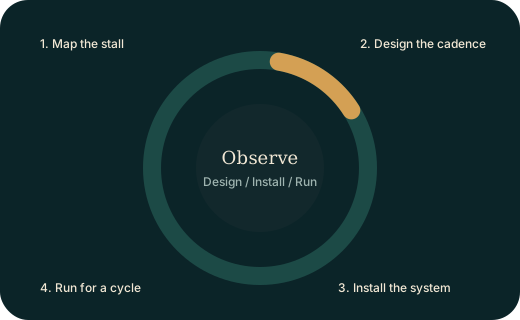
We work in the language of operations: queues, owners, definitions of ready, cadences, and closed loops. Recommendations are written so they can be tested in a normal week. If a rule cannot be kept when two people are on leave, it is rewritten.
The practice is independent. We do not resell software, take implementation kickbacks, or hide a product inside a consulting engagement. If a simple board already works, we keep it.
We start from how requests actually move — not from an org chart or a preferred framework.
Artifacts have to survive interruptions. Cadence beats intensity.
Shared ownership is how work goes quiet. Roles are explicit, including who covers absence.
If the system lives only in one manager’s head, it is not installed.
Fees, deliverables, and decision rights are confirmed before implementation. See the offer.
The same method is described as a client path on the engagement page.